
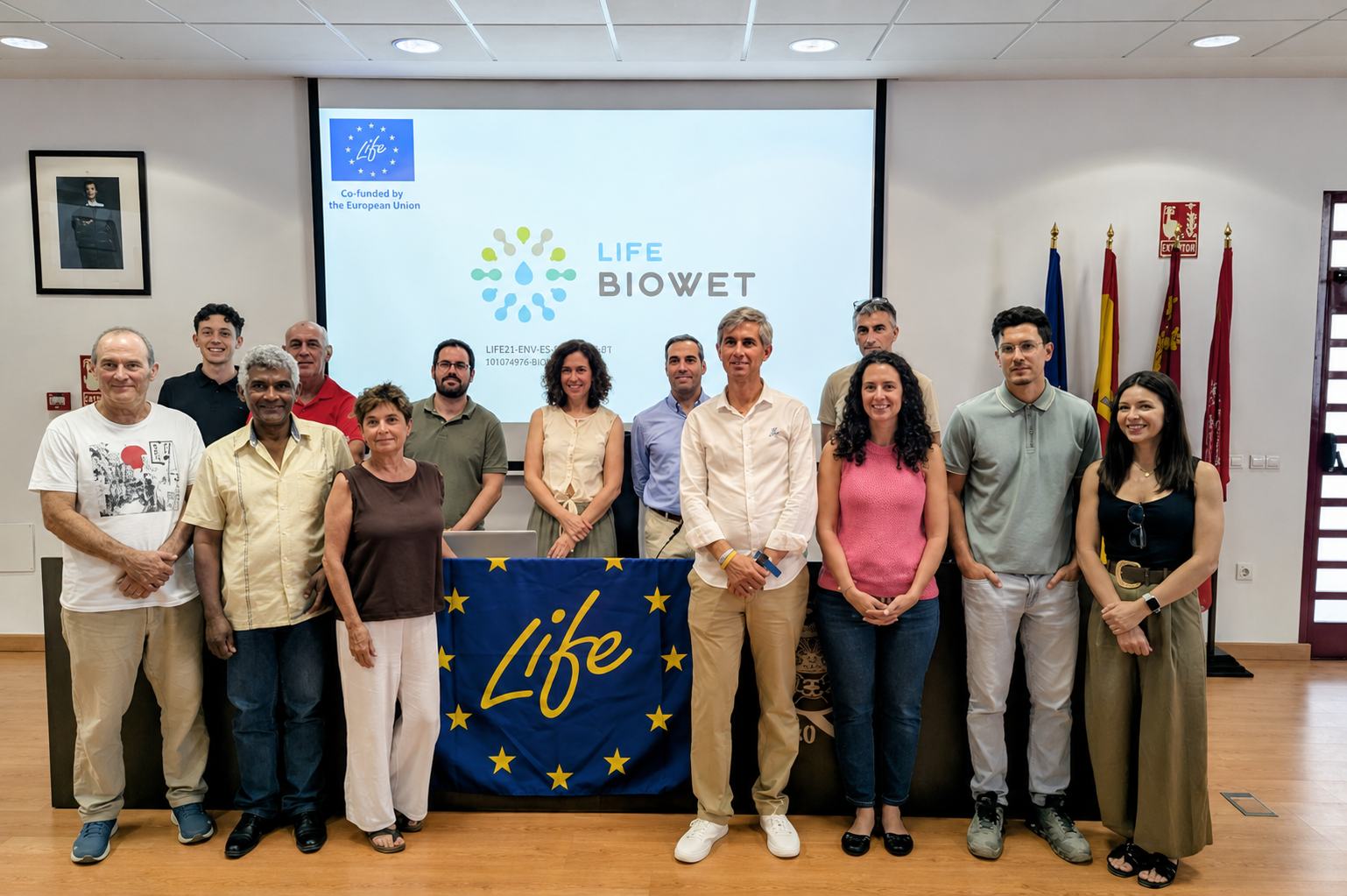

The European Life Biowet project is another example of the innovation model in which universities, research centres, public authorities and companies work together to develop technological solutions that address the major challenges facing agriculture. The project brings together the University of Murcia, the Technical University of Cartagena, and Novagric, a company within the industrial group AgritechMur, responsible for transferring this knowledge to the market and to international projects.
Murcia, July 2026. AgritechMurcia continues to strengthen the position of the Region of Murcia as a benchmark for agricultural innovation, water-use efficiency and technology transfer applied to the major challenges of the agricultural sector. In this context, the European Life Biowet project, co-funded by the European Union through the LIFE Programme, is another example of the Murcian agri-technological ecosystem’s ability to develop practical solutions to challenges related to efficient water use, nutrient pollution reduction and the sustainability of intensive agriculture.
The initiative, coordinated by the University of Murcia (UMU) with the participation of researchers from the Technical University of Cartagena (UPCT), also involves Novagric, a company belonging to the AgritechMur Group and part of the AgritechMurcia Ecosystem, specialising in agricultural technology, greenhouses, irrigation and solutions for intensive agriculture. The project aims to safely treat and reuse drainage water from hydroponic greenhouses, which can accumulate high concentrations of nitrates and phosphates that may impact groundwater and associated aquatic ecosystems.
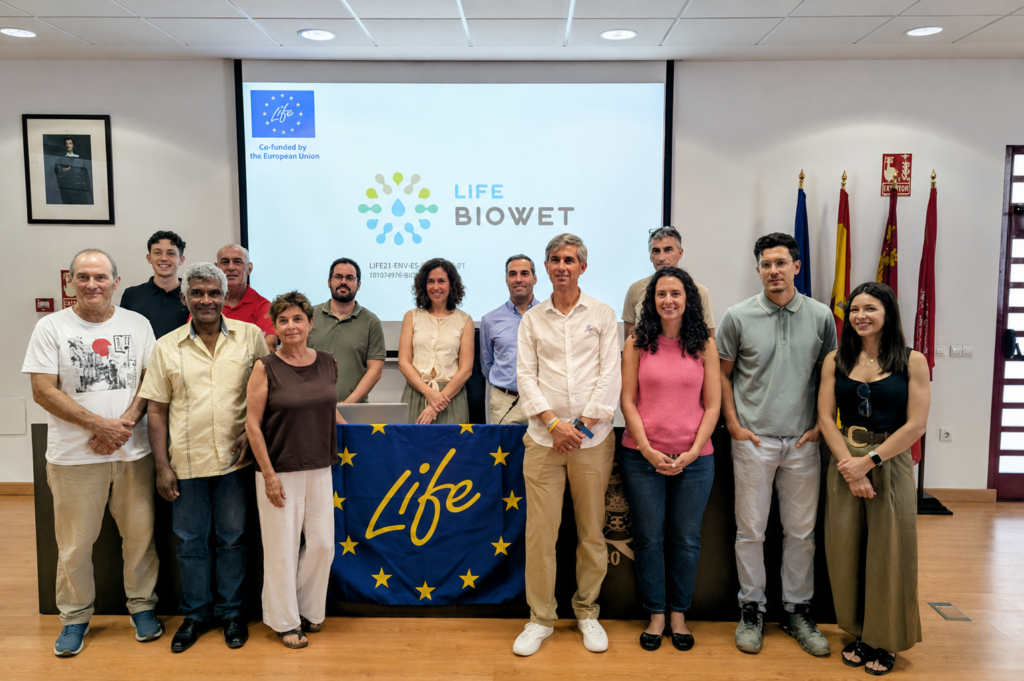
All three organisations—UMU, UPCT and Novagric—are members of the AgritechMurcia Ecosystem, making this project a clear example of collaboration between public institutions, the scientific community and private companies across the region. The solutions being developed are the result of this public-private cooperation, transforming accumulated knowledge and experience into innovative, sustainable and practical solutions to the real challenges facing agriculture.
Life Biowet builds on more than ten years of research carried out by the University of Murcia and the Technical University of Cartagena on nature-based solutions to reduce nutrient pollution in the Mar Menor watershed. The two universities are now transferring this two-stage treatment model—a bioreactor followed by a constructed wetland—to a new scenario with a comparable pollution risk: wastewater generated by hydroponic greenhouses.
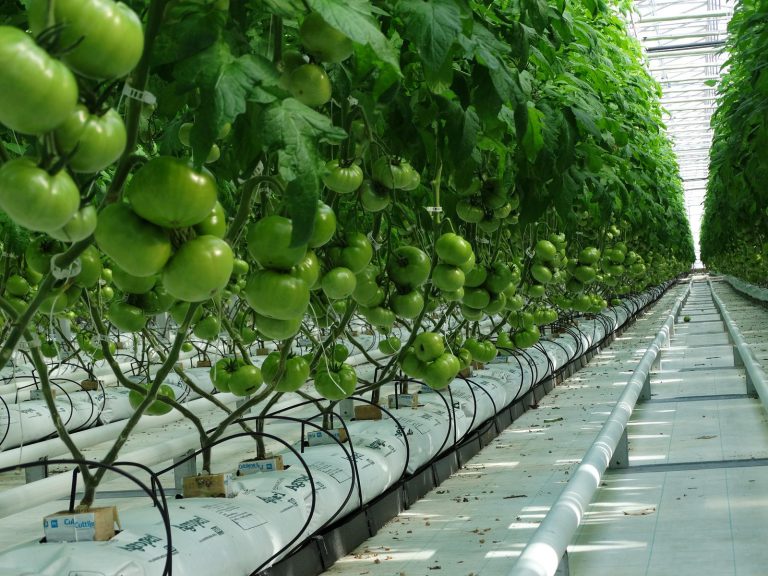
In this type of cultivation, plants are grown on an inert substrate and receive a nutrient solution that supplies water and essential nutrients in a controlled manner. This production model increases productivity, improves crop management and reduces water consumption. However, the proper treatment of drainage water is essential to prevent nutrient losses and move towards more circular and sustainable production systems.
The solution proposed by Life Biowet first consists of passing the drainage water through woodchip bioreactors, where the activity of denitrifying microorganisms helps reduce nitrate concentrations. The water then flows through subsurface-flow constructed wetlands, where the combination of plants, substrate and microbial communities completes the purification process by retaining other potential contaminants, including phosphorus, excess organic matter generated by the bioreactors and pathogenic organisms.
This process will improve the final water quality and facilitate its safe reuse within the production systems themselves, reducing the need for fresh water while minimising the environmental impact of agricultural activities.
During the project, two full-scale pilot systems will be built, operated and evaluated in greenhouses located in the Region of Murcia. These pilot facilities will be installed at the Agricultural Demonstration and Technology Transfer Centre (CDTA) in El Mirador (San Javier) and at the facilities of Grupo Hortofrutícola Paloma in Mazarrón.
The two pilot systems are expected to recirculate up to 93% of the drainage water, reducing the combined demand for fresh water by 23% across both facilities while removing more than 13.5 tonnes of nitrates per year.
Within this framework, Novagric will be responsible for the design and construction of the bioreactors and constructed wetlands, contributing its expertise in technological solutions for intensive agriculture and agricultural production infrastructures. Its participation reinforces the role of AgritechMurcia group companies as active contributors to the development of applied solutions capable of connecting scientific knowledge with the real needs of agricultural producers.
The project also includes the participation of the Agricultural Demonstration and Technology Transfer Centre (CDTA) and Grupo Hortofrutícola Paloma as project partners, as well as the Spanish Association for Technical, Technological and Organisational Transfer in Agriculture and Livestock (Asetaga), which will help disseminate the project’s results throughout the agricultural sector.
https://novagric.com/life-biowet-reutilizacion-del-agua-invernaderos-hidroponicos/: One of the companies within the AgritechMurcia Ecosystem collaborates in a European technology project that will enable the safe reuse of more than 90% of water in hydroponic greenhouses