
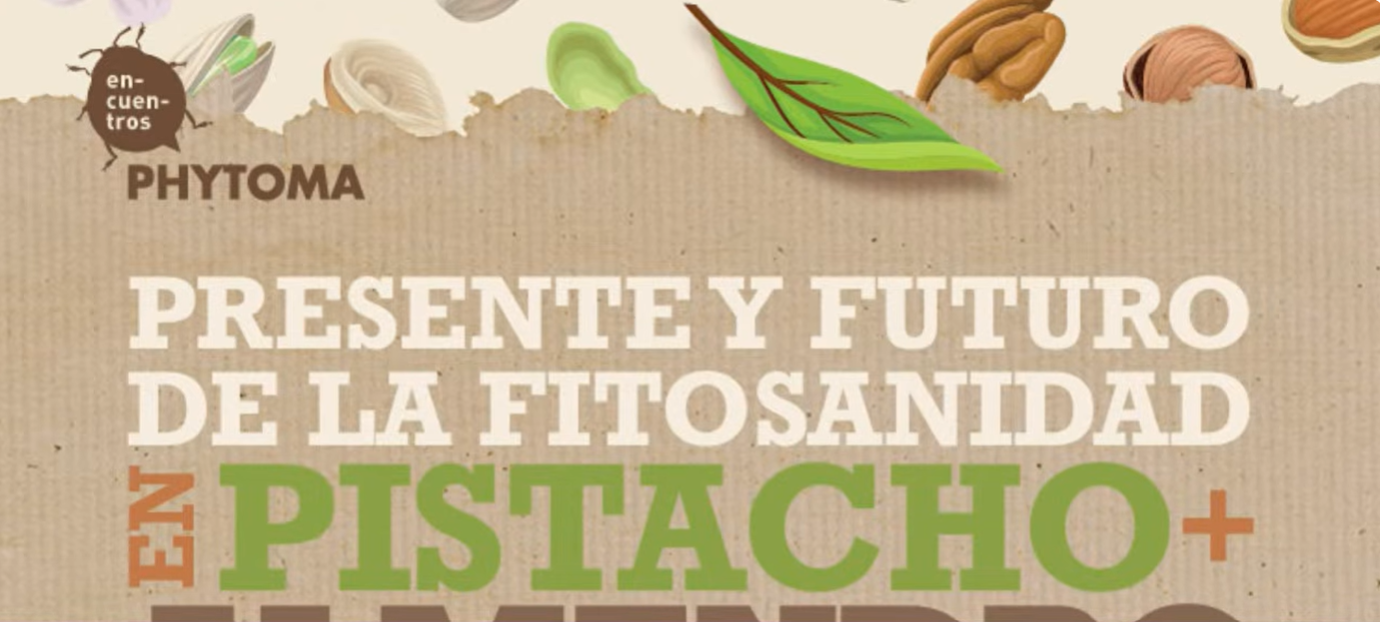

On April 28 and 29, the technical meeting “Present and Future of Plant Health in Pistachio, Almond, and Other Nut Crops”, organized by Phytoma, was held in Ciudad Real. Among the participants were several members of the public-private cluster AgritechMurcia, specifically IMIDA and Microgaia.
Microgaia’s participation: early diagnosis and real-time microorganism detection
Microgaia’s participation was represented by Anaïs De Gea Hernández, Head of the Molecular Biology Department, who delivered the presentation “Real-Time qPCR: innovation for the early detection of diseases in almond and pistachio crops”.
During her presentation, Anaïs explained the role of early diagnostic tools in the prevention and management of agricultural diseases. In particular, she highlighted the potential of real-time PCR as a technology capable of providing fast, sensitive, and specific information to support field decision-making.
One of the key elements of her presentation was phytAlert, a tool developed for real-time microorganism detection. This solution makes it possible to identify the presence of fungi, bacteria, viruses, mycorrhizae, and other microorganisms — both phytopathogenic and beneficial — in different types of samples, such as soil or substrate, plant material, water, surfaces, insect vectors, and microorganism-based products.
Among the main advantages of this tool are its sensitivity, specificity, quantitative capacity, multipathogen screening, speed for decision-making, and cost-effectiveness. Its application is especially relevant in crops such as almond and pistachio, where early detection can help reduce risks, anticipate plant health issues, and optimize crop management strategies.
IMIDA’s participation: almond cultivation, plant health status, and pest management
IMIDA also had a significant presence at the event through the participation of Modesto del Pino Pérez, agricultural and food researcher, and Carmen M.ª Lacasa, scientific collaborator of the Crop Protection team.
Modesto del Pino Pérez participated on April 29 and addressed topics related to almond cultivation in the Region of Murcia, its current situation, and the main plant health challenges affecting this crop. During his presentation, he highlighted the importance of almond cultivation in the region, with 85,154 hectares cultivated in 2024, of which 90.5% are rainfed and 45% correspond to organic production. Reference was also made to regional production, which reached 14,638 tons of in-shell almonds in 2023.
In addition, Modesto analyzed the current plant health situation, influenced by factors such as climate change, globalization, the introduction of new varieties, changes in production systems, the evolution of phytosanitary product use, and the changing status of certain pests. In this context, he emphasized the need to redesign current integrated pest management programs, adapting them to new climatic and production conditions in both conventional and organic farming systems.
For her part, Carmen M.ª Lacasa focused her participation on the biology and control of the almond wasp, providing further insight into the pest’s life cycle and control strategies aimed at reducing its incidence in plantations. Her contribution reinforced the importance of applied research and technical monitoring in addressing pests that directly affect crop productivity and sustainability.
The participation of Microgaia and IMIDA in this meeting highlights the value of collaboration between biotechnology companies, research centers, and agricultural professionals. In a context where plant health increasingly requires faster, more accurate, and more sustainable solutions, early diagnosis, agricultural research, and knowledge transfer are becoming key tools for the future of nut crops.